
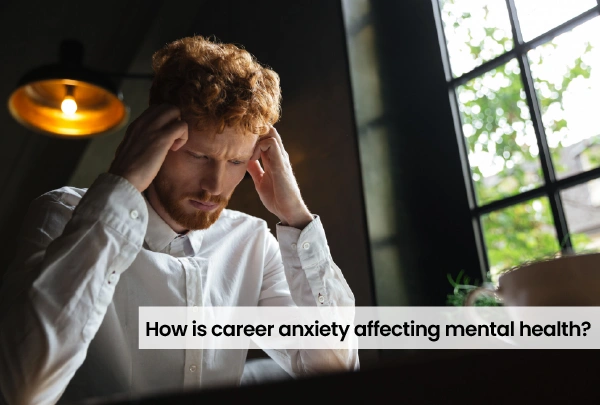
Choosing a career is one of the most significant decisions in life, yet it has become one of the biggest sources of stress for students, graduates, and working professionals alike. With increasing competition, economic uncertainty, social media comparisons, family expectations, and rapidly changing job markets, career anxiety has become more common than ever. While occasional worry about one’s future is normal, persistent career-related anxiety can have a profound impact on mental health and overall well-being.
Career anxiety is the persistent fear, uncertainty, or stress related to career choices, job security, professional growth, or future success. Left unaddressed, it can affect emotional health, physical well-being, relationships, and work performance.
Understanding Career Anxiety
Excessive worry over decisions or results connected to one’s profession is referred to as career anxiety. It may begin during school or college when students feel pressured to choose the “right” profession. It can also affect professionals who fear losing their jobs, struggle with career transitions, or feel dissatisfied with their current roles.
Some common concerns include:
- Fear of making the wrong career choice
- Difficulty deciding between multiple career options
- Pressure to meet family or societal expectations
- Job insecurity
- Financial concerns
- Fear of failure or rejection
- Feeling “behind” compared to peers
- Uncertainty about future career growth
Research suggests that career anxiety is often influenced by social comparison, lack of career guidance, economic uncertainty, and cognitive distortions about success and failure.
How Career Anxiety Impacts Mental Health
1. Increased Stress Levels
Career uncertainty keeps the brain in a constant state of alertness. Individuals may continuously think about interviews, examinations, promotions, or employment opportunities. This prolonged stress activates the body’s stress response, making it difficult to relax.
Chronic stress may result in:
- Muscle tension
- Headaches
- Fatigue
- Irritability
- Difficulty concentrating
2. Anxiety Disorders
Persistent career worries can develop into generalized anxiety symptoms. Individuals may constantly overthink every decision, imagine worst-case scenarios, or fear disappointing others.
Common symptoms include:
- Racing thoughts
- Restlessness
- Excessive worry
- Rapid heartbeat
- Difficulty sleeping
- Panic attacks in severe cases
When anxiety becomes persistent and begins interfering with work, education, relationships, and daily functioning, professional intervention becomes important.
3. Depression
Repeated job rejections, unemployment, workplace dissatisfaction, or feeling “stuck” professionally may contribute to feelings of hopelessness and low self-worth.
Signs include:
- Persistent sadness
- Loss of motivation
- Low energy
- Feelings of worthlessness
- Loss of interest in activities once enjoyed
People may begin believing they are failures simply because they have not achieved their career goals, even when those expectations are unrealistic.
4. Low Self-Esteem
Many individuals begin linking their self-worth to their professional achievements. A rejection letter, poor performance review, or unsuccessful interview may feel like a personal failure rather than a temporary setback.
This can create a cycle where reduced confidence leads to poorer performance, reinforcing anxiety.
5. Burnout
Career anxiety often pushes individuals to overwork in an attempt to prove themselves. Long working hours, perfectionism, and fear of failure eventually lead to burnout.
Burnout may involve:
- Emotional exhaustion
- Reduced productivity
- Cynicism toward work
- Feeling detached from responsibilities
- Lack of motivation
Common Causes of Career Anxiety
Several factors contribute to career-related stress:
- Social comparison: Constant exposure to others’ achievements on social media often creates unrealistic expectations.
- Family pressure: Expectations to pursue certain careers can conflict with personal interests.
- Economic uncertainty: Rising living costs and competitive job markets increase employment concerns.
- Perfectionism: Believing every career decision must be perfect increases fear of making mistakes.
- Lack of career clarity: Many individuals have multiple interests but struggle to identify the best career path.
- Workplace pressure: Heavy workloads, unrealistic deadlines, toxic work environments, and job insecurity contribute to ongoing anxiety.
Who Is Most at Risk?
Career anxiety can affect anyone, but it is particularly common among:
- High school and college students
- Recent graduates
- Job seekers
- Young professionals
- Individuals changing careers
- Professionals returning to work after a break
- Employees facing layoffs or organizational restructuring
Healthy Ways to Manage Career Anxiety
Although career anxiety is common, it can be managed effectively with the right strategies.
Develop Realistic Expectations
No career path is perfect. Every profession involves challenges, learning opportunities, and occasional setbacks. Accepting that uncertainty is a natural part of career growth can reduce unnecessary pressure.
Set Achievable Goals
Breaking long-term career aspirations into smaller, manageable goals can make progress feel more attainable. Celebrate small achievements rather than focusing solely on the final destination.
Limit Social Comparison
Social media often showcases only the highlights of others’ careers. Comparing oneself to carefully curated success stories can increase feelings of inadequacy. Focus on personal progress instead of external comparisons.
Build Career Skills
Continuous learning through certifications, workshops, internships, and professional development can improve confidence and reduce uncertainty.
Practice Stress Management
Relaxation techniques such as mindfulness meditation, deep breathing exercises, yoga, regular physical activity, and maintaining a healthy sleep schedule can help regulate stress levels.
Seek Professional Guidance
Career counselling and psychological support can help individuals clarify their career goals, identify strengths, overcome self-doubt, and develop effective coping strategies for anxiety.
When Should You Seek Professional Help?
It may be beneficial to consult a mental health professional if career anxiety:
- Persists for several weeks or months
- Interferes with daily functioning
- Causes panic attacks
- Leads to persistent sadness or hopelessness
- Affects sleep or appetite
- Impacts work or academic performance
- Causes avoidance of important career opportunities
Early intervention can prevent anxiety from becoming more severe and improve both emotional well-being and career decision-making.
How Psychowellness Center Can Help
At Psychowellness Center, experienced best psychologists in Delhi NCR, career counsellors near me, best counsellors near me, and counseling psychologists in Delhi provide comprehensive support for individuals experiencing career-related stress and anxiety. Through evidence-based approaches such as Cognitive Behavioral Therapy (CBT), career assessment, stress management techniques, confidence-building interventions, and personalized counselling, individuals can better understand their strengths, overcome fears, and make informed career decisions.
Whether you are a student choosing a career, a graduate entering the workforce, or a professional considering a career transition, seeking timely psychological support can make the journey less overwhelming and more fulfilling. Visit us at our Janakpuri or Dwarka Sector 17 centers, or contact us at 011-47039812 or 7827208707 to schedule a consultation and take the first step toward better mental well-being and career clarity.
Conclusion
Career anxiety is becoming an increasingly significant mental health concern in today’s competitive world. While ambition and planning are important, excessive fear about one’s professional future can negatively affect emotional health, confidence, and overall quality of life. Recognizing the signs early and adopting healthy coping strategies can help individuals navigate career challenges with resilience. Seeking professional guidance is not a sign of weakness but an investment in both mental well-being and long-term career success.
Contributions: Dr. R.K. Suri, Clinical Psychologist, and Ms. Sakshi Dhankhar, Counselling Psychologist
References
https://www.psychowellnesscenter.com/Blog/6-effective-tips-to-deal-with-career-anxiety/
https://www.psychowellnesscenter.com/Blog/the-balancing-act-career-family-and-mental-health/
Lent, R. W., & Brown, S. D. (2020). Career decision making, fast and slow: Toward an integrative model of intervention for sustainable career choice. Journal of Vocational Behavior, 120, 103448.
Maslach, C., & Leiter, M. P. (2016). Burnout. In G. Fink (Ed.), Stress: Concepts, cognition, emotion, and behavior (pp. 351–357). Academic Press.
World Health Organization. (2022). World mental health report: Transforming mental health for all. World Health Organization.