
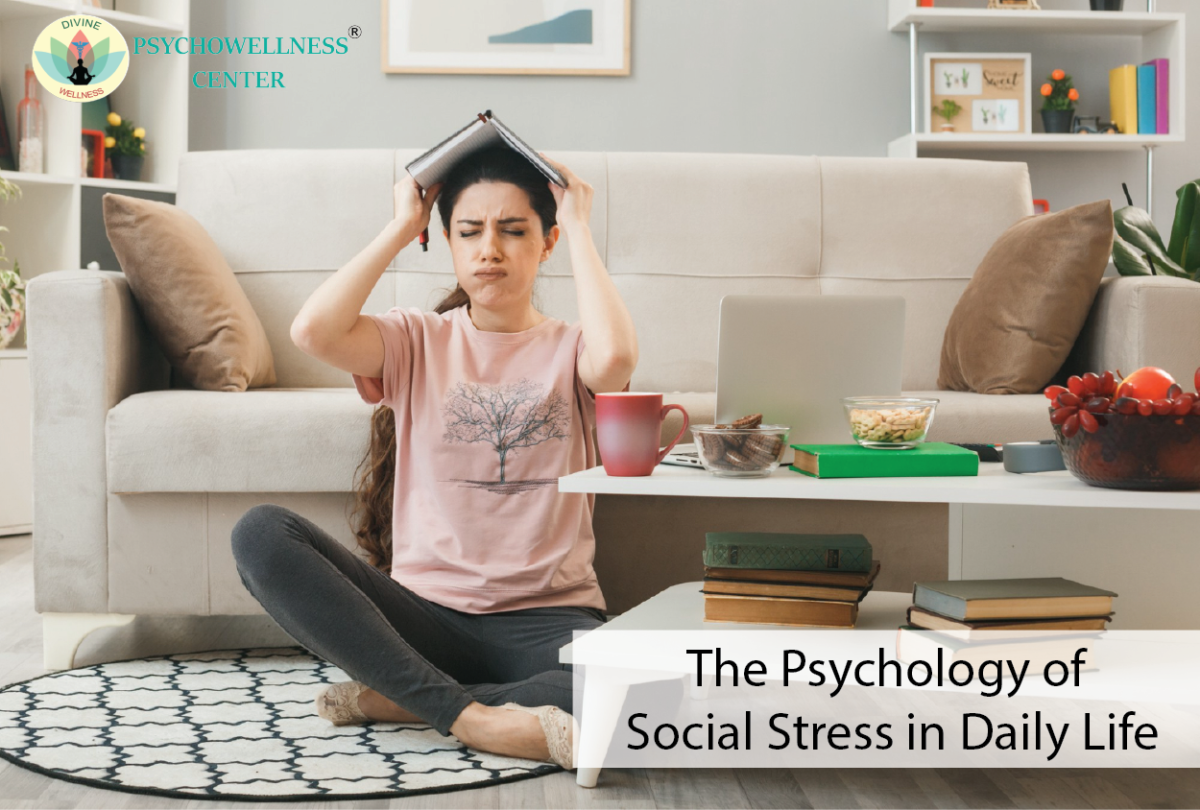
Social interactions are a routine part of everyday life, yet they can also be a significant source of stress. From workplace expectations to interpersonal relationships and public interactions, individuals often navigate complex social environments that demand emotional control, communication, and adaptability. When these demands exceed one’s coping capacity, social stress can begin to affect both mental and physical well-being.
Understanding the psychological mechanisms behind social stress helps in identifying its impact and developing more effective ways to manage it.
Understanding Social Stress
Social stress refers to the pressure experienced in situations involving interaction, evaluation, or perceived judgment by others. This can occur in formal settings such as meetings and presentations, as well as informal contexts like conversations, social gatherings, or online interactions.
While a certain level of social stress is normal and can even enhance performance, excessive or persistent stress may lead to discomfort, avoidance, or reduced self-confidence in social situations.
Common Sources of Social Stress
Social stress can arise from various everyday situations. Workplace dynamics, including performance expectations, peer comparison, and communication challenges, are common contributors. Academic environments can also create pressure through competition and evaluation.
Interpersonal relationships are another major source. Miscommunication, unresolved conflict, or unclear expectations can increase emotional strain. Additionally, social media has introduced new forms of comparison and validation, often intensifying perceived judgment.
Major life transitions, such as relocation or changes in social roles, can further increase vulnerability to social stress.
Psychological Factors Involved
Several psychological processes contribute to how social stress is experienced. One key factor is perception, how individuals interpret social situations. For example, neutral interactions may be perceived as negative or judgmental, increasing distress.
Cognitive patterns such as overthinking, self-criticism, or fear of negative evaluation can intensify stress responses. These patterns are often associated with conditions like anxiety, where individuals anticipate adverse outcomes in social situations.
Past experiences also play a role. Negative social experiences can shape expectations and influence how future interactions are approached.
Emotional and Behavioural Responses
Social stress can manifest through a range of emotional responses, including nervousness, irritability, or self-doubt. In some cases, it may contribute to low mood or withdrawal, which can overlap with symptoms of depression.
Behaviourally, individuals may begin to avoid social situations, limit communication, or rely on safety behaviours to reduce discomfort. While these strategies may provide temporary relief, they often reinforce the underlying stress over time.
Physical symptoms such as increased heart rate, sweating, or fatigue may also accompany social stress, reflecting the body’s stress response.
Impact on Daily Functioning
When social stress becomes persistent, it can affect multiple areas of life. Work performance may decline due to difficulty communicating or participating in group activities. Relationships may become strained due to avoidance or misunderstandings.
Over time, ongoing stress can reduce confidence and limit opportunities for personal and professional growth. This makes it important to address social stress before it becomes deeply ingrained.
Role of Cognitive and Emotional Regulation
Managing social stress involves both cognitive and emotional processes. Cognitive regulation focuses on identifying and modifying unhelpful thought patterns, such as assumptions of negative judgment.
Emotional regulation involves recognising feelings, understanding triggers, and responding in a balanced way. Together, these processes help individuals engage more effectively in social situations.
Therapeutic approaches such as CBT (Cognitive Behavioural Therapy) are commonly used to address these patterns by promoting more realistic thinking and adaptive behaviours.
Building Social Confidence
Confidence in social settings develops through gradual exposure and skill-building. This may include practising communication skills, setting realistic expectations, and learning to tolerate mild discomfort.
Over time, repeated positive or neutral experiences help reshape perceptions and reduce anxiety. Developing self-awareness also allows individuals to recognise strengths and areas for improvement without excessive self-criticism.
Importance of Boundaries and Balance
Not all social stress needs to be eliminated. In some cases, setting boundaries can reduce unnecessary pressure. This may involve limiting exposure to stressful environments, managing time effectively, or prioritising meaningful interactions.
Balancing social engagement with personal time supports emotional recovery and prevents burnout. Healthy boundaries contribute to more sustainable social functioning.
When to Seek Professional Support
Professional support may be beneficial when social stress becomes persistent, overwhelming, or interferes with daily functioning. Difficulty maintaining relationships, avoiding essential interactions, or experiencing intense distress in social situations are indicators that intervention may be helpful.
Counselling provides a structured environment to explore underlying patterns, develop coping strategies, and improve confidence in social contexts.
Conclusion
Social stress is a common aspect of daily life, but when it becomes excessive, it can affect emotional well-being, relationships, and overall functioning. Understanding its psychological basis allows individuals to respond more effectively and build healthier patterns of interaction.
Individuals exploring options such as counselling near me, therapist near me, psychologist in delhi, or seeking support from best psychologists and top psychologists in Delhi may consider consulting Psychowellness Center, Services are offered in an organized and private setting in Janakpuri and Dwarka Sec-17, Delhi; appointments can be made at 011-47039812 or 7827208707.
Contributions: Dr. R.K. Suri, Clinical Psychologist, and Ms. Charavi Shah, Counselling Psychologist
References
- Alden, L. E., & Taylor, C. T. (2011). Interpersonal processes in social anxiety disorder. In J. W. Weeks (Ed.), The Wiley-Blackwell handbook of social anxiety disorder (pp. 125–152). Wiley-Blackwell.
- Clark, D. M., & Wells, A. (1995). A cognitive model of social phobia. In R. G. Heimberg, M. R. Liebowitz, D. A. Hope, & F. R. Schneier (Eds.), Social phobia: Diagnosis, assessment, and treatment (pp. 69–93). Guilford Press.
- Hofmann, S. G. (2007). Cognitive factors that maintain social anxiety disorder: A comprehensive model and its treatment implications. Cognitive Behaviour Therapy, 36(4), 193–209. https://doi.org/10.1080/16506070701421313
- https://www.psychowellnesscenter.com/service-stress-counselling-delhi/
- https://www.psychowellnesscenter.com/Blog/bullying-and-social-anxiety-help-from-best-psychologist-in-delhi/
- https://www.psychowellnesscenter.com/Blog/tips-to-strengthen-your-social-connections/
- https://www.psychowellnesscenter.com/Blog/anxiety-counselling-in-delhi-for-high-pressure-careers/