
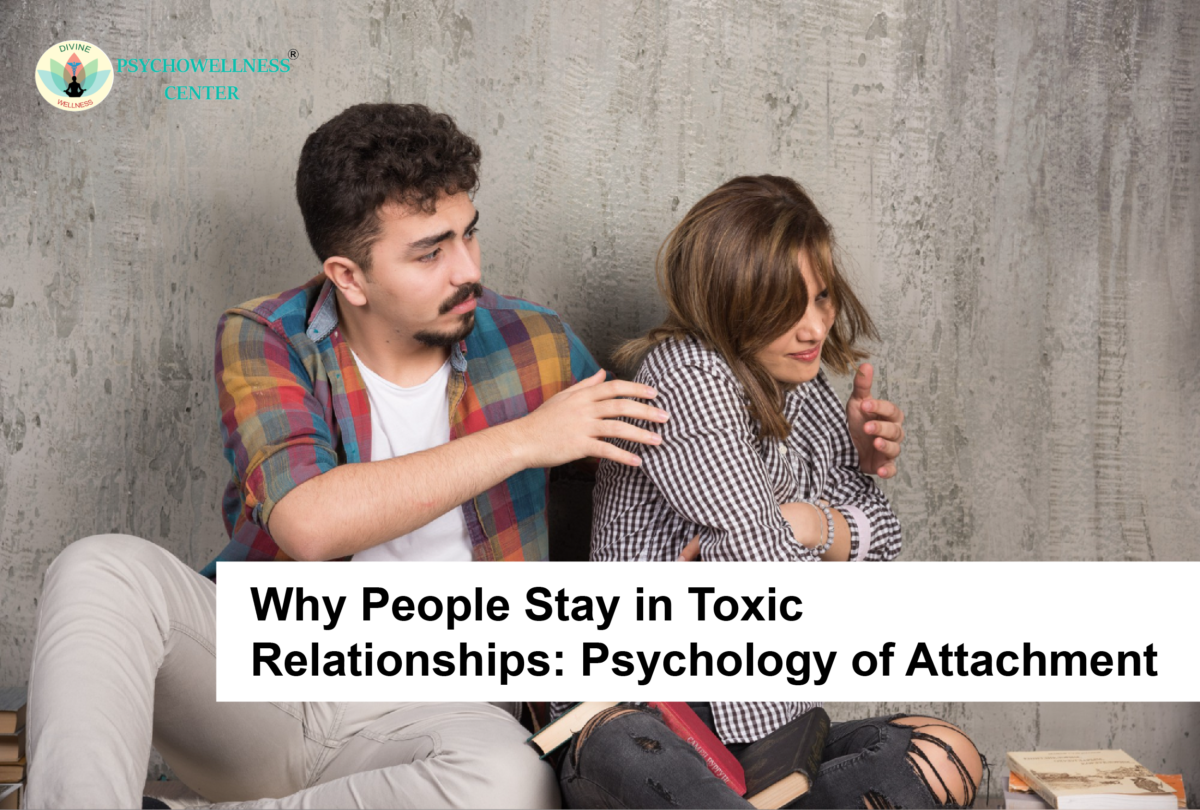
Relationships are meant to provide emotional support, companionship, and a sense of security. However, not all relationships are healthy. Many individuals find themselves trapped in toxic relationships that are marked by manipulation, emotional neglect, constant criticism, dishonesty, or even abuse. One of the most puzzling questions psychologists often hear is: Why do people stay in relationships that cause them pain?
The answer lies in the complex psychology of attachment, emotional dependency, past experiences, and the human need for connection. Understanding these underlying factors can help individuals recognize unhealthy relationship patterns and take steps toward emotional well-being.
Understanding Toxic Relationships
A toxic relationship is one in which one or both partners engage in behaviors that negatively affect the emotional, mental, or physical health of the other person. Toxicity may not always be obvious in the beginning. Many unhealthy relationships start with intense affection, attention, and promises, making it difficult for individuals to identify warning signs.
Over time, behaviors such as controlling actions, excessive jealousy, emotional manipulation, blame-shifting, and disrespect can gradually become normalized. As a result, the affected partner may begin to question their own perceptions and lose confidence in their ability to leave.
The Role of Attachment Theory
John Bowlby, a psychologist, created attachment theory, which describes how our relationships as adults are shaped by our early experiences. The emotional bonds formed with caregivers during childhood influence how people seek love, trust, and security later in life.
In general, people with stable attachment types are at ease with both closeness and independence. However, those with insecure attachment styles may be more vulnerable to remaining in unhealthy relationships.
Anxious Attachment
People with anxious attachment often fear abandonment and rejection. They may constantly seek reassurance from their partners and feel intense distress when conflicts arise. Even when a relationship becomes harmful, their fear of being alone may outweigh their desire to leave.
Avoidant Attachment
Individuals with avoidant attachment tend to suppress emotions and avoid vulnerability. Because they find it difficult to express their needs or think that emotional detachment is normal, they could continue to be in toxic relationships.
Fearful-Avoidant Attachment
This attachment style combines both anxiety and avoidance. People want intimacy but also worry about being harmed. Such internal conflict can create cycles of unhealthy attachment that make leaving difficult.
The Power of Emotional Investment
Another reason people stay in toxic relationships is the emotional investment they have made over time. Relationships often involve shared memories, experiences, dreams, and future plans. The longer the relationship lasts, the harder it can become to walk away.
Many individuals experience what psychologists call the “sunk cost fallacy.” They believe that because they have already invested significant time, energy, and emotions into the relationship, ending it would mean all those efforts were wasted. This mindset often keeps people stuck despite ongoing unhappiness.
Intermittent Reinforcement and Emotional Dependency
Cycles of attachment and abuse are common in toxic relationships. After periods of conflict or emotional pain, the toxic partner may suddenly become loving, apologetic, and attentive.
This unpredictable pattern creates what psychologists refer to as intermittent reinforcement. Because positive experiences occur occasionally, the brain becomes conditioned to keep hoping for change. The person begins to minimize the negative experiences and concentrate on the positive ones.
This cycle can create strong emotional dependency, making it extremely difficult to break free even when the relationship is damaging.
Fear of Loneliness
Humans are naturally social beings who seek connection and belonging. For many people, the fear of loneliness can feel more overwhelming than the discomfort of a toxic relationship.
Some individuals worry they may never find another partner. Others fear social judgment, especially if they are married or have children. Cultural expectations and family pressures can further reinforce the decision to stay.
As a result, remaining in an unhealthy relationship may appear safer than facing uncertainty and change.
Low Self-Esteem and Self-Worth
Toxic relationships often erode self-esteem over time. Constant criticism, manipulation, or emotional invalidation can make individuals doubt their value and capabilities.
When self-worth becomes dependent on a partner’s approval, leaving may seem impossible. Many people begin to believe they do not deserve better treatment or that they are somehow responsible for the relationship’s problems.
Professional support from a Relationship counsellor can help individuals rebuild confidence, challenge negative beliefs, and develop healthier relationship expectations.
Trauma Bonding
One of the most powerful psychological mechanisms that keeps people in toxic relationships is trauma bonding. Trauma bonds develop when periods of abuse or mistreatment are followed by moments of affection and care.
The emotional highs and lows create a strong psychological attachment that can resemble addiction. The person becomes emotionally tied to the hope that the relationship will return to its earlier positive state.
Trauma bonding often explains why intelligent, capable individuals remain in situations that outsiders may find difficult to understand.
The Importance of Recognizing Red Flags
Identifying toxic patterns early can prevent long-term emotional damage. Some common warning signs include:
- Constant criticism and blame
- Controlling behaviors
- Lack of respect for boundaries
- Emotional manipulation
- Excessive jealousy
- Dishonesty and secrecy
- Isolation from friends and family
- Frequent feelings of anxiety, fear, or inadequacy
Recognizing these signs is the first step toward making informed decisions about one’s emotional health and future.
Seeking Professional Support
It is seldom simple to leave a bad relationship. It often requires emotional support, self-reflection, and guidance from trained professionals. Therapy can help individuals understand attachment patterns, strengthen self-esteem, and develop healthier coping strategies.
Working with the best Relationship counsellor in India can provide valuable insights into recurring relationship patterns and support long-term emotional growth. Similarly, individuals facing complex relationship challenges may benefit from consulting the best Relationship counsellor in Delhi who specializes in attachment issues and interpersonal dynamics.
For those experiencing ongoing relationship distress, connecting with a qualified relationship counsellor in Delhi can offer a safe space to explore concerns, improve communication skills, and make informed choices about their relationships.
Conclusion
People do not stay in toxic relationships simply because they enjoy suffering or fail to recognize the harm. More often, they remain because of deep psychological factors such as attachment styles, emotional dependency, fear of loneliness, trauma bonding, and diminished self-esteem. Understanding these influences is essential for breaking unhealthy cycles and creating healthier, more fulfilling relationships.
Seeking professional relationship counselling can empower individuals to understand their emotional needs, establish healthy boundaries, and build stronger connections based on respect and trust. If you or someone you know is struggling with relationship difficulties, professional support can make a significant difference.
Psychowellness Center offers professional counseling services to help individuals and couples navigate relationship challenges and improve emotional well-being. Services are available at Janakpuri, Delhi and Dwarka Sector 17, Delhi | Contact Numbers: 011-47039812 / 7827208707.
Contributions: Dr. R.K. Suri, Clinical Psychologist, and Ms. Tanu Sangwan, Counselling Psychologist
References
- https://www.psychowellnesscenter.com/Blog/tips-to-gain-control-over-your-emotions/
- https://www.psychowellnesscenter.com/Blog/adhd-beyond-attention-emotional-dysregulation-as-the-hidden-struggle/
- https://www.psychowellnesscenter.com/Blog/cbt-and-dbt-therapy-for-trauma-survivors/
- Bowlby, J. (1988). A secure base: Parent-child attachment and healthy human development. Basic Books.
- Johnson, S. M. (2019). Attachment theory in practice: Emotionally focused therapy (EFT) with individuals, couples, and families. Guilford Press.
- Levine, A., & Heller, R. (2010). Attached: The new science of adult attachment and how it can help you find—and keep—love. TarcherPerigee.
- Herman, J. L. (2015). Trauma and recovery: The aftermath of violence—from domestic abuse to political terror. Basic Books.
- Beck, A. T. (2011). Cognitive therapy of personality disorders (2nd ed.). Guilford Press.