
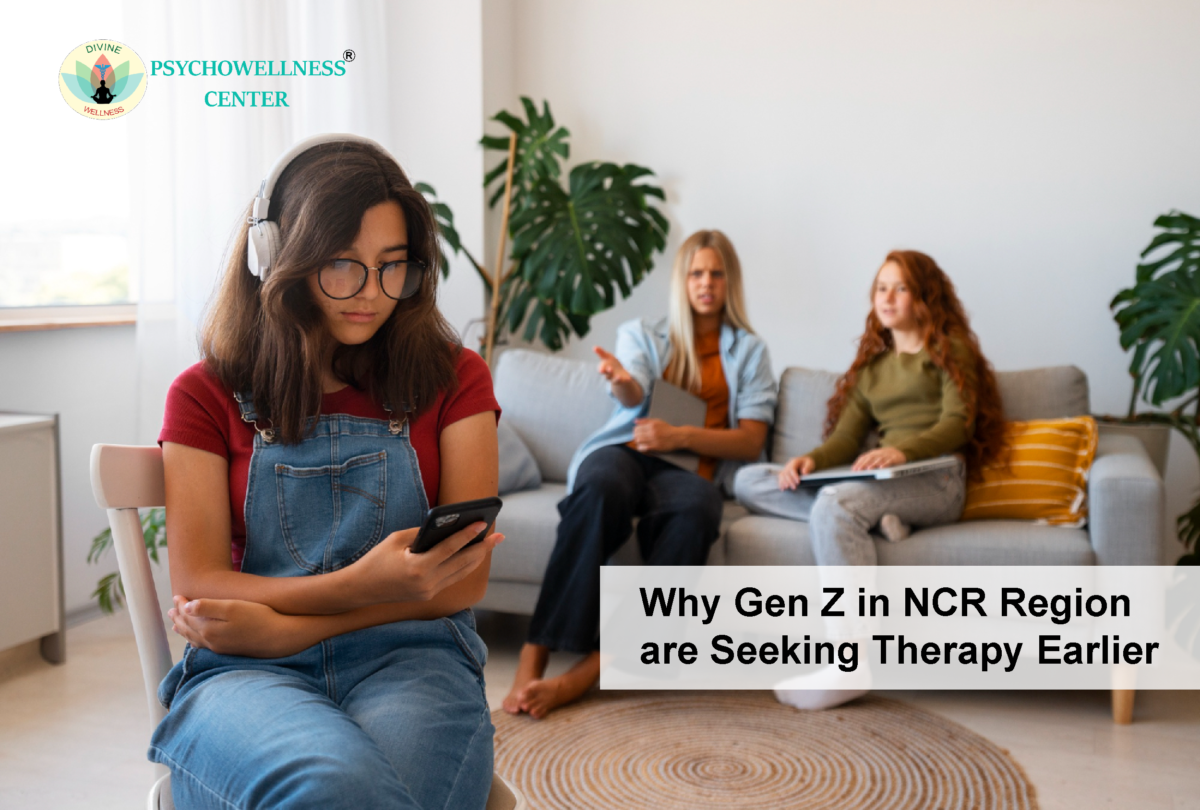
The National Capital Region (NCR), encompassing Delhi, Gurgaon, Noida, Faridabad, and Ghaziabad, is home to one of India’s youngest and most dynamic populations. Alongside rapid urbanization, academic competition, career pressures, and digital connectivity, a noticeable shift has emerged among young adults: more members of Generation Z are seeking professional mental health support earlier than previous generations.
Unlike older generations who often viewed therapy as a last resort, Gen Z increasingly sees counselling as a proactive step toward personal growth, emotional well-being, and self-awareness. Recent reports indicate a significant rise in counselling utilization among individuals aged 20–25, demonstrating a generational shift in attitudes toward mental healthcare.
A Generation More Aware of Mental Health
One of the primary reasons Gen Z seeks therapy earlier is increased mental health awareness. Growing up in the digital age has exposed young people to conversations about emotional well-being through social media, podcasts, educational campaigns, and public discussions. Mental health topics that were once considered taboo are now openly discussed among peers, educators, influencers, and even employers.
This increased awareness helps young adults recognize signs of anxiety, emotional distress, and psychological struggles before they become overwhelming. Rather than waiting until problems become severe, many choose professional support at the first signs of difficulty. Research also suggests that young adults are increasingly willing to engage in help-seeking behaviors that can prevent the worsening of mental health concerns.
Academic and Career Pressures in NCR
The NCR region is known for its competitive educational institutions, coaching centers, universities, and demanding corporate environments. Students and young professionals frequently face immense pressure to excel academically, secure prestigious jobs, and achieve financial independence at an early age.
This environment can contribute to heightened levels of stress, uncertainty about the future, and emotional exhaustion. Many Gen Z individuals are realizing that seeking therapy is not a sign of weakness but a practical way to develop coping skills, resilience, and psychological flexibility while navigating these challenges.
The rise of workplace counselling utilization among young employees further reflects this trend, with Gen Z leading the adoption of mental health services across Indian organizations.
The Influence of Social Media
Social media has played a dual role in Gen Z’s mental health journey. On one hand, platforms provide valuable information, normalize therapy, and reduce stigma. On the other hand, constant exposure to curated lifestyles, comparison culture, and unrealistic expectations can negatively impact self-esteem and emotional well-being.
Young people today are continuously exposed to messages about success, appearance, productivity, and achievement. This can lead to feelings of inadequacy, self-doubt, and low motivation when personal experiences do not match the idealized versions they see online.
Many Gen Z individuals seek therapy to better understand themselves, establish healthier boundaries with technology, and build a more balanced relationship with social media.
Navigating Identity and Personal Growth
Unlike previous generations, Gen Z places significant importance on self-discovery and authenticity. They are more likely to question traditional expectations regarding education, careers, lifestyle choices, and personal values.
Therapy provides a safe space to explore identity, strengths, beliefs, and future aspirations. Many young adults seek professional guidance not because they are experiencing severe psychological symptoms, but because they want clarity about their lives and direction.
In this context, therapy often supports personal development, self-awareness, and effective goal setting, helping individuals align their decisions with their values and long-term aspirations.
Relationship Challenges and Emotional Complexity
Young adults in NCR frequently navigate complex interpersonal dynamics involving friendships, family expectations, dating, and workplace interactions. Increased awareness of emotional health has also encouraged Gen Z to examine their interpersonal patterns more closely.
Many seek therapy to improve communication skills, understand attachment patterns, and manage challenges within a relationship. Rather than tolerating unhealthy dynamics, this generation often prioritizes emotional well-being and seeks guidance when conflicts arise.
Community discussions among Indian Gen Z also suggest growing interest in healthy boundaries, self-respect, and emotional awareness within personal relationships.
Therapy as Prevention Rather Than Crisis Management
Historically, mental health support was often sought only after severe difficulties emerged. Gen Z is helping redefine therapy as preventive care rather than emergency intervention.
Many young adults seek support before experiencing severe burnout, chronic emotional difficulties, or significant functional impairment. They view counselling similarly to physical fitness, something that helps maintain overall well-being rather than simply treating problems.
This shift may contribute to earlier identification and management of concerns related to depression, emotional struggles, and life transitions. Early intervention is widely recognized as beneficial for improving long-term mental health outcomes.
The Rise of Accessible Therapy
Accessibility has also transformed mental healthcare. Young adults are comfortable using digital platforms for learning, communication, and healthcare services. As a result, psychological counselling near me has become an attractive option for students and working professionals seeking flexibility and privacy.
Many individuals in NCR now prefer Counselling India services because they eliminate travel time, increase scheduling convenience, and provide access to specialists regardless of location. The availability of the best psychologists in India has made professional support more accessible than ever before, particularly for those balancing academics, internships, and demanding work schedules.
Digital mental health services have significantly reduced traditional barriers to seeking help, encouraging earlier engagement with therapy.
A Positive Cultural Shift
Perhaps the most significant reason Gen Z is seeking therapy earlier is a fundamental cultural shift. Mental health is increasingly viewed as an essential component of overall well-being rather than a topic to be hidden or ignored. Therapy is becoming associated with self-awareness, resilience, and growth rather than stigma.
Many young adults actively seek guidance from mental health professionals, including the Best Psychologist in Delhi NCR, not only to address challenges but also to improve self-understanding, build resilience, and strengthen emotional control skills.
As awareness continues to grow across NCR, early therapy engagement is likely to become even more common. This proactive approach represents a promising shift toward healthier emotional habits, greater self-awareness, and improved psychological well-being for the next generation.
Conclusion
The increasing number of Gen Z individuals seeking therapy in the best counselors in Delhi NCR reflects changing attitudes toward mental health, personal development, and self-care. Academic pressures, career uncertainty, social media influences, identity exploration, and evolving cultural norms have all contributed to this trend. Rather than waiting for crises to occur, many young adults are choosing early intervention and professional support as tools for growth, resilience, and emotional well-being. This shift not only benefits individuals but also contributes to a healthier and more psychologically aware society.
To better understand and navigate the emotional, academic, social, and career-related challenges that lead many Gen Z individuals in the NCR region to seek therapy earlier, young adults can seek professional support at Psychowellness Center. In-person services are offered in Dwarka and Janakpuri, New Delhi (phone: 011-47039812 or 7827208707) and online through TalktoAngel. With the guidance of trained mental health professionals, individuals can develop greater self-awareness, strengthen emotional resilience, improve interpersonal skills, manage anxiety and stress effectively, build self-confidence, enhance decision-making abilities, and address concerns related to identity, relationships, career uncertainty, and emotional well-being through evidence-based approaches such as cognitive behavioural therapy, dialectical behaviour therapy, mindfulness-based interventions, acceptance and commitment therapy, emotional regulation training, and supportive counselling.
Gen Z in the NCR region are seeking therapy earlier than previous generations, driven by greater awareness, social media influence, and a willingness to challenge the silence around emotional struggles. They are also embracing present-moment awareness practices that enhance concentration, emotional balance, and overall life satisfaction, making mental health support a proactive choice rather than a last resort.
Contributions: Dr. R.K. Suri, Clinical Psychologist, and Ms. Mahima Mathur, Counselling Psychologist
References
Economic Times. (2026, May 25). Gen Z is normalising therapy at work: Report. The Economic Times. Retrieved from https://economictimes.indiatimes.com/jobs/hr-policies-trends/gen-z-is-normalising-therapy-at-work-report/articleshow/131303314.cms
Nauphal, M., Ward-Ciesielski, E., & Eustis, E. H. (2023). Preventing anxiety and depression in emerging adults: A case for targeting help-seeking intentions and behaviors. Clinical and Translational Science of Mental Health, 4(1). https://doi.org/10.1177/26320770221124802
https://www.psychowellnesscenter.com/Blog/gen-z-and-mental-health-a-new-generations-challenges/