
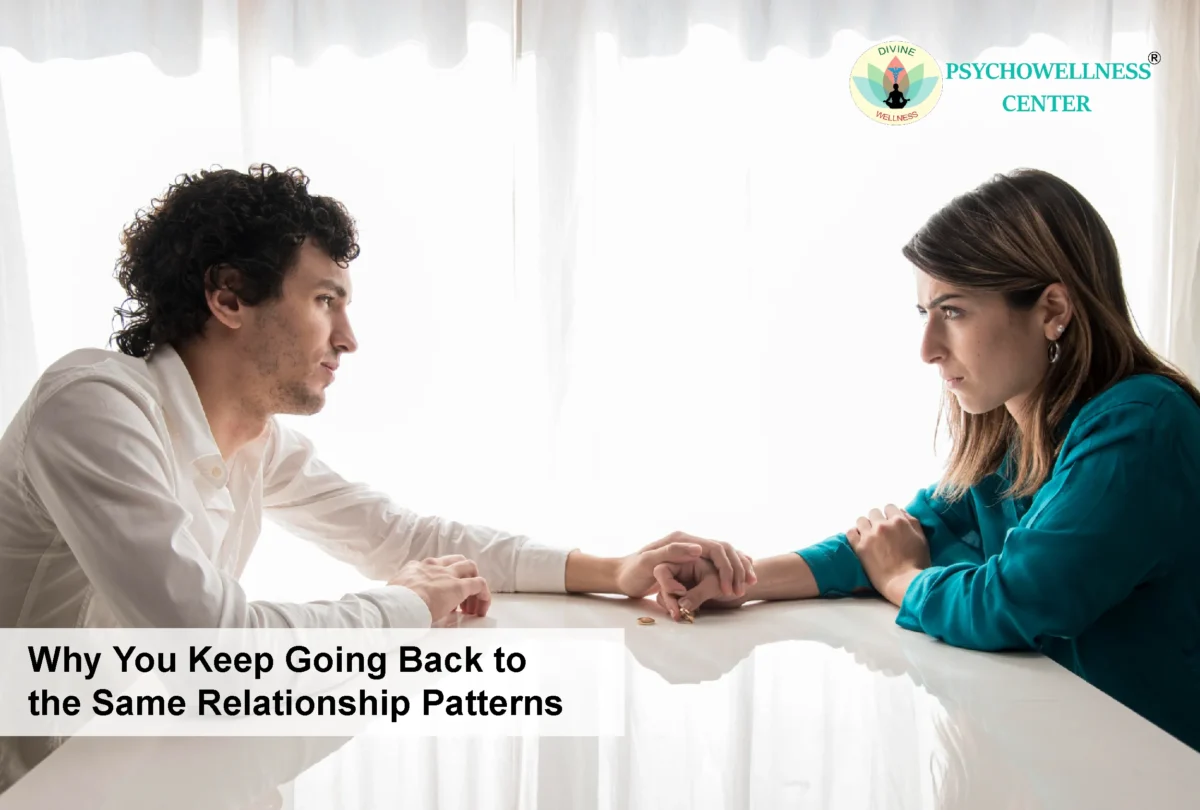
Have you ever wondered why your relationships seem different on the surface but end in similar ways? Perhaps you repeatedly find yourself with emotionally unavailable partners, struggle with trust, avoid conflict, or feel responsible for fixing others. Although every situation is unique, recurring patterns in a relationship are rarely accidental. They are often shaped by early life experiences, attachment styles, beliefs about love, and learned coping mechanisms.
Recognizing these patterns is the first step toward creating healthier and more fulfilling connections. While change is not always easy, understanding the reasons behind repetitive behaviors can help you make more intentional choices in future relationships.
Why Do Relationship Patterns Repeat?
Human beings naturally seek familiarity. Our brains are wired to prefer situations that feel predictable, even when those situations are unhealthy. Experiences from childhood, previous relationships, and family dynamics influence how we perceive intimacy, trust, communication, and conflict.
For example, someone who grew up in a highly critical environment may unconsciously expect rejection from partners. Another person who experienced inconsistent caregiving may become overly dependent or fearful of abandonment. These beliefs often operate outside conscious awareness, making repetitive relationship choices feel almost automatic.
The Role of Attachment Styles
Attachment theory explains that early interactions with caregivers shape how people connect with others later in life. Individuals with secure attachment generally feel comfortable with closeness and independence. In contrast, those with anxious or avoidant attachment styles may struggle with emotional intimacy.
People with anxious attachment often experience heightened anxiety, depression, and trauma about rejection and may seek constant reassurance. Those with avoidant attachment may distance themselves when relationships become emotionally close. When these attachment patterns remain unexamined, they can repeatedly influence partner selection and relationship dynamics.
Familiar Does Not Always Mean Healthy
Many individuals mistake familiarity for compatibility. If emotional unpredictability, criticism, or inconsistency were common in childhood, similar behaviors in adult relationships may initially feel normal.
This familiarity can create cycles in which individuals repeatedly overlook warning signs, tolerate unhealthy behaviors, or ignore their own emotional needs. Breaking these cycles requires recognizing the difference between what feels familiar and what is genuinely healthy.
Unhelpful Beliefs That Keep the Cycle Going
Certain beliefs can reinforce unhealthy relationship patterns, such as:
- “I have to earn love.”
- “If I love someone enough, they will change.”
- “Conflict means the relationship is failing.”
- “My needs are less important than my partner’s.”
These deeply rooted assumptions influence decisions, communication styles, and emotional responses. Challenging these beliefs creates opportunities for healthier connections built on mutual respect rather than fear or obligation.
Learning Better Emotional Responses
Many recurring relationship difficulties are linked to difficulties with emotional control. Strong emotions such as anger, fear, jealousy, or disappointment can lead to impulsive reactions, avoidance, or unhealthy communication.
Developing emotional awareness allows individuals to pause before reacting, identify underlying feelings, and respond more constructively. Emotional regulation strengthens trust and reduces unnecessary conflict, creating healthier interactions with partners.
Setting Healthier Boundaries
Breaking old relationship patterns often requires establishing clear personal boundaries. Healthy boundaries communicate your values, expectations, and limits without controlling another person. This process may involve learning to say no, expressing needs openly, recognizing red flags earlier, and accepting that healthy relationships involve mutual effort rather than constant sacrifice.
Creating realistic goal-setting around communication, boundaries, and personal values can help individuals remain focused on long-term emotional wellbeing instead of short-term emotional comfort.
Personal Growth Comes Before Relationship Growth
Many people search for the “right” partner while overlooking the importance of their own personal development. Lasting change begins with self-awareness and consistent self-improvement. Developing confidence, improving communication skills, increasing self-compassion, and addressing unresolved emotional wounds all contribute to healthier relationship choices. Rather than changing to please someone else, personal growth helps individuals build relationships that reflect their authentic values and needs.
How Therapy Can Help Break Repetitive Patterns
Because many relationship habits operate unconsciously, professional support can be extremely valuable. Therapy helps individuals identify underlying beliefs, attachment patterns, emotional triggers, and behavioral cycles that may not be immediately obvious.
Evidence-based approaches such as cognitive behaviour therapy and couples therapy help individuals identify and challenge unhelpful thinking patterns that contribute to unhealthy relationship behaviors. By replacing distorted beliefs with more balanced perspectives, people can develop healthier emotional responses and communication styles.
Similarly, dialectical behavior therapy teaches practical skills for emotional regulation, distress tolerance, interpersonal effectiveness, and mindfulness. These skills are especially useful for individuals who experience intense emotional reactions or struggle with maintaining stable relationships.
For couples facing recurring conflicts, relationship counselling provides a supportive environment to improve communication, rebuild trust, understand recurring interaction patterns, and develop healthier ways of resolving disagreements.
Knowing When to Seek Professional Help
If you notice that every relationship follows similar painful patterns despite your best efforts, professional guidance can provide valuable insight. Therapy is not only for relationships in crisis; it is also an opportunity to better understand yourself and build healthier connections in the future.
Individuals searching for a therapist near me, seeking psychological counselling in delhi, or consulting a psychologist in delhi ncr can benefit from evidence-based interventions that address both individual emotional wellbeing and relationship functioning.
Conclusion
Repeating unhealthy relationship patterns does not mean you are destined to experience the same outcomes forever. These cycles often reflect learned behaviors, attachment experiences, and unconscious beliefs rather than personal failure. By developing self-awareness, improving emotional regulation, challenging limiting beliefs, setting healthy boundaries, and seeking professional support when needed, it is possible to build relationships based on trust, respect, and emotional security. Every healthy relationship begins with understanding yourself first.
To better understand and break recurring relationship patterns, individuals and couples can seek professional support at Psychowellness Center. Services are available in person at Dwarka and Janakpuri, New Delhi (Contact: 011-47039812 / 7827208707) and online through TalktoAngel. With the guidance of trained mental health professionals, individuals can identify unhealthy behavioral cycles, develop greater self-awareness, improve emotional regulation, strengthen communication skills, build healthier attachment patterns, establish effective boundaries, and foster more secure and fulfilling relationships through evidence-based approaches such as cognitive behavioural therapy, dialectical behaviour therapy, schema therapy, attachment-based therapy, mindfulness-based interventions, emotion regulation training, and supportive counselling.
Breaking repeated relationship patterns often requires more than self-reflection. Seeking professional guidance for couples and relationship concerns can help individuals identify unhealthy dynamics, improve communication, and develop healthier ways of connecting, leading to more secure and fulfilling relationships.
Contributions: Dr. R.K. Suri, Clinical Psychologist, and Ms. Mahima Mathur, Counselling Psychologist
References
- Beck, J. S. (2021). Cognitive behavior therapy: Basics and beyond (3rd ed.). Guilford Press.
- Johnson, S. M. (2019). Attachment theory in practice: Emotionally focused therapy (EFT) with individuals, couples, and families. Guilford Press.
- Mikulincer, M., & Shaver, P. R. (2016). Attachment in adulthood: Structure, dynamics, and change (2nd ed.). Guilford Press.
- Tatkin, S. (2022). In each other’s care: A guide to the most common relationship conflicts and how to work through them. Sounds True.