
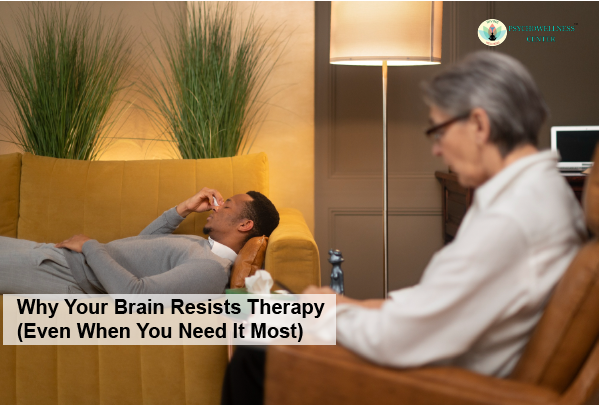
You finally decide to seek help. Maybe life feels heavier than usual, your emotions are harder to manage, or you simply cannot “snap out of it” anymore. You know therapy could help, yet suddenly your mind starts making excuses:
“Maybe it’s not that serious.”
“I can handle this alone.”
“What if the therapist judges me?”
“What if talking about it makes things worse?”
Ironically, the moment we need support the most is often the exact moment our brain begins resisting it. This resistance is not laziness, weakness, or failure. It is actually your brain trying to protect you in the only way it knows how.
Your Brain Prefers Familiar Pain Over Unfamiliar Change
Human brains are wired for survival, not happiness. If something feels predictable, the brain considers it “safe” — even when it is emotionally unhealthy.
This is why people stay stuck in unhealthy patterns, toxic environments, or emotional cycles for years. Whether it is chronic stress, unhealthy coping mechanisms, or unresolved emotional wounds, the brain often chooses familiarity over uncertainty.
Therapy introduces change. And change, even positive change, can feel threatening. Think of therapy like reorganising a cluttered room. Your brain knows where every emotional mess is hidden. Therapy asks you to open those drawers, sort through the chaos, and rebuild healthier systems. Naturally, part of your mind protests.
Emotional Avoidance Feels Safer
Many people avoid therapy because their emotions feel overwhelming. If someone has spent years suppressing sadness, fear, or disappointment, talking openly can feel emotionally dangerous.
This is especially true for individuals dealing with anxiety, past emotional wounds, or chronic self-criticism. The brain may convince you that avoiding difficult conversations protects you from pain.
In reality, avoidance usually strengthens emotional distress over time. Imagine carrying a heavy backpack every day but refusing to open it because you fear what is inside. Therapy helps unpack that weight slowly and safely. Yet initially, the brain focuses only on the discomfort of opening the bag, not the relief that follows.
The Fear of Vulnerability
Therapy requires honesty, and honesty can feel uncomfortable.
For many people, vulnerability was never modelled as safe while growing up. They may have been told to “stay strong,” “stop overreacting,” or “deal with problems privately.” Over time, emotional openness begins to feel risky.
This is particularly common among people experiencing depression, relationship difficulties, or emotional burnout. Sometimes individuals fear that if they begin talking, all their emotions will spill out uncontrollably.
But therapy is not about losing control. It is about understanding your emotions with guidance and structure. A good therapist does not force vulnerability. They help create emotional safety so your mind slowly learns that being honest does not automatically lead to rejection or shame.
Your Brain Loves Short-Term Comfort
One reason therapy feels hard is that the benefits are gradual, while avoidance provides immediate relief.
Skipping a therapy session may temporarily reduce nervousness. Distracting yourself with social media, work, or unhealthy habits may feel easier in the moment. The brain rewards immediate comfort even if it creates long-term suffering.
This is also why some people struggling with addiction or emotional dependency resist treatment initially. The brain becomes attached to familiar coping patterns because they offer temporary emotional escape.
Therapy, on the other hand, asks for patience. It often involves sitting with emotions instead of running from them. That process can feel deeply uncomfortable before it becomes healing. However, long-term emotional growth rarely comes from avoiding discomfort altogether.
Healing Can Affect Your Identity
Sometimes people unconsciously resist therapy because their struggles have become deeply tied to how they see themselves.
For example:
- “I’m just an angry person.”
- “I’ve always been this way.”
- “Nothing ever works for me.”
- “I’m the anxious one in the family.”
When emotional struggles become part of identity, healing can feel strangely unfamiliar. The brain begins wondering:
Who will I be without these patterns?
People experiencing chronic low motivation or long-standing emotional difficulties often struggle with this internal conflict. Even positive transformation can feel emotionally disorienting at first.
Therapy challenges old narratives and creates space for healthier self-perception. While that sounds empowering, it also requires the brain to let go of familiar beliefs it has held for years.
Therapy Challenges the “Survival Mode” Brain
When someone lives under constant emotional pressure, their nervous system may stay stuck in survival mode.
In survival mode, the brain focuses on:
- avoiding danger,
- reducing discomfort,
- staying emotionally guarded,
- and conserving energy.
Deep reflection, emotional processing, and personal growth become harder because the brain prioritises getting through the day. This is why therapy may initially feel exhausting for individuals dealing with chronic sleep issues, emotional fatigue, or overwhelming daily pressure. The nervous system often needs time before it feels safe enough to process emotions deeply.
Therapy does not instantly “fix” the brain. It gradually teaches the nervous system that safety, calmness, and emotional balance are possible again.
Resistance Does Not Mean Therapy Is Failing
One of the biggest misconceptions about therapy is that it should feel comfortable immediately. In reality, resistance itself is often part of the healing process. Missing sessions, feeling emotionally blocked, wanting to avoid difficult topics, or doubting progress are all common experiences. Therapy brings hidden thoughts and emotional habits into awareness, and the brain naturally reacts to that disruption.
Even people with high self-awareness can struggle with emotional resistance. Intellectual understanding and emotional healing are not always the same thing. Sometimes your brain understands the problem logically but still fears emotional change. That does not mean therapy is not working.
Small Steps Matter More Than Perfect Readiness
Many people delay therapy, waiting to feel “ready.” But emotional readiness often comes after beginning the process, not before. You do not need perfect confidence to start healing.
Sometimes healing begins with:
- booking the appointment,
- attending one session,
- admitting you are struggling,
- or simply staying curious about your emotions instead of avoiding them.
Progress in therapy is rarely a dramatic overnight transformation. More often, it looks like slowly becoming kinder to yourself, understanding your reactions, improving emotional awareness, and learning healthier coping patterns.
Over time, the same brain that once resisted therapy can begin craving the emotional clarity and safety it provides.
Conclusion
Your brain resists therapy because it is designed to protect you from uncertainty, emotional discomfort, and vulnerability. But emotional safety does not come from avoidance forever. Healing begins when we slowly teach the mind that growth is not danger.
If you are struggling with persistent social anxiety, emotional overwhelm, or unresolved relationship difficulties, seeking professional help can make the healing process easier and more structured. Consulting a psychologist in Delhi NCR, the Best Psychologist in India, or finding a psychologist near me at Psychowellness Center can help individuals better understand their emotional patterns and develop healthier coping strategies for long-term wellbeing. For expert assistance, interested individuals can visit the centre’s locations in Dwarka and Janakpuri, New Delhi, or contact the team at 011-47039812 or 7827208707 for appointments and counselling support.
For more mental health awareness content, emotional wellness guidance, and therapy-related discussions, check the mental health awareness videos on the Psychowellness Center YouTube Channel, which shares informative content on emotional resilience, self-awareness, and personal growth.
Contributions: Dr. R.K. Suri, Clinical Psychologist, and Ms. Mansi , Counselling Psychologist
References
- Hayes, S. C., Strosahl, K. D., & Wilson, K. G. (2016). Acceptance and commitment therapy: The process and practice of mindful change (2nd ed.). Guilford Press.
- Van der Kolk, B. A. (2015). The body keeps the score: Brain, mind, and body in the healing of trauma. Penguin Books.
- Leahy, R. L. (2017). Cognitive therapy techniques: A practitioner’s guide (2nd ed.). Guilford Press.