
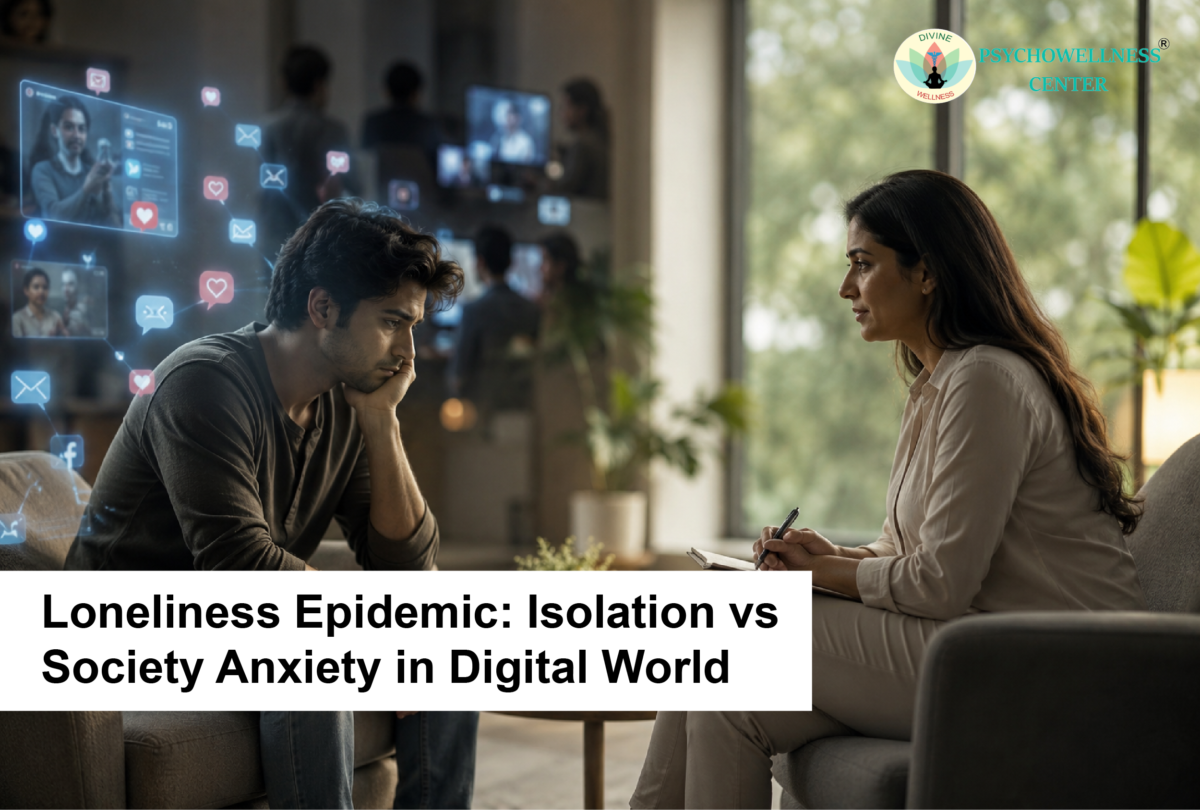
In an era where a message can travel across continents in seconds, and social media allows us to stay connected 24/7, loneliness has surprisingly become one of the most widespread mental health concerns of modern society. While technology has transformed communication and brought people closer virtually, many individuals report feeling emotionally disconnected, misunderstood, and alone.
The rise of digital communication has created a paradox: we are more connected than ever before, yet many people experience profound loneliness. Understanding the difference between social isolation and social anxiety is essential for addressing this growing epidemic and promoting healthier relationships in the digital age.
The Growing Concern of Loneliness
Loneliness is not simply about being alone. It is a subjective emotional experience that occurs when there is a gap between the social connections we desire and those we actually have. A person may have hundreds of online friends, attend social gatherings, and interact with others regularly, yet still feel lonely.
Research suggests that chronic loneliness can significantly impact both physical and mental health. It has been linked to depression, anxiety, low self-esteem, sleep disturbances, increased stress levels, and even cardiovascular health concerns. As a result, loneliness is increasingly being recognized as a major public health issue worldwide.
The digital revolution has changed the way people communicate, but it has not necessarily fulfilled the human need for meaningful connection. In many cases, it has altered how relationships are formed and maintained, creating new challenges for emotional well-being.
Social Isolation vs. Loneliness: Understanding the Difference
Many people use the terms “social isolation” and “loneliness” interchangeably, but they are not the same.
Social Isolation
Social isolation refers to an objective lack of social contact or interaction. It occurs when individuals have limited relationships, minimal social engagement, or little access to supportive networks.
Examples include:
- Living alone with little social contact
- Working remotely without regular interaction
- Limited participation in community activities
A socially isolated person may have very few opportunities to interact with others. However, not everyone who is socially isolated experiences loneliness.
Loneliness
Loneliness is a subjective emotional state. It is the feeling of being disconnected, unsupported, or misunderstood, regardless of how many people are physically present.
For example, someone may spend time with colleagues, friends, or family every day but still feel emotionally distant from them. On the other hand, an individual with only a few close relationships may feel deeply connected and satisfied.
The Role of Social Anxiety
Another important factor contributing to the loneliness epidemic is social anxiety.
Social anxiety involves an intense fear of being judged, criticized, embarrassed, or rejected in social situations. Individuals with social anxiety often want meaningful relationships but struggle to initiate or maintain social interactions due to overwhelming fear and self-consciousness.
Common signs of social anxiety include:
- Avoiding social gatherings
- Fear of speaking in groups
- Excessive worry about others’ opinions
- Difficulty initiating conversations
- Overanalyzing interactions afterward
- Fear of making mistakes in public
Over time, these fears can lead to avoidance behaviors. The less a person engages socially, the more isolated they may become, creating a cycle where loneliness and anxiety reinforce each other.
How the Digital World Contributes to Loneliness
Technology offers many advantages, including easier communication and access to support networks. However, excessive dependence on digital interactions can sometimes contribute to emotional disconnection.
1. Superficial Connections
Many online interactions lack emotional depth. Likes, comments, and short messages may create the illusion of connection but often fail to provide the meaningful engagement necessary for emotional fulfillment.
Human beings naturally seek understanding, empathy, and genuine connection, needs that cannot always be met through brief digital exchanges.
2. Social Comparison
Social media platforms often showcase carefully curated highlights of people’s lives. Vacations, achievements, relationships, and celebrations are displayed more frequently than struggles or challenges.
Constant exposure to these idealized images can lead individuals to compare themselves with others, creating feelings of inadequacy, loneliness, and dissatisfaction.
3. Fear of Missing Out (FOMO)
The digital world makes it easier to see what others are doing at any moment. While this can foster connection, it can also trigger feelings of exclusion.
Seeing friends attend events, celebrate milestones, or spend time together may lead some individuals to feel left out or disconnected, even when no exclusion was intended.
4. Reduced Face-to-Face Communication
Digital communication cannot fully replace in-person interactions. Important elements of emotional connection include physical presence, facial emotions, body language, and eye contact.
As screen time increases, opportunities for meaningful face-to-face interactions may decrease, affecting relationship quality and emotional well-being.
Warning Signs of Chronic Loneliness
Typical indicators include the following:
- Feeling disconnected from others
- Persistent sadness or emptiness
- Difficulty trusting people
- Low motivation and energy
- Increased irritability
- Spending excessive time online without feeling fulfilled
- Withdrawal from social activities
- Increased anxiety in social situations
If these feelings persist over time, they can significantly impact mental health and daily functioning.
Building Meaningful Connections in the Digital Age
Addressing loneliness requires more than increasing the number of social interactions. It requires creating sincere and significant relationships.
Some effective strategies include:
Prioritize Quality Relationships
Focus on nurturing relationships that provide emotional support, understanding, and trust rather than simply increasing social contacts.
Create Opportunities for Real-World Interaction
Joining community groups, hobby clubs, volunteer organizations, or professional networks can help create genuine social connections.
Set Healthy Digital Boundaries
Limiting excessive social media use can reduce unhealthy comparison and improve overall well-being.
Practice Self-Compassion
Many individuals experiencing loneliness blame themselves for their situation. Developing self-compassion can help reduce negative self-talk and increase emotional control.
Seek Professional Support
When loneliness is accompanied by anxiety, depression, or significant distress, professional counseling can provide valuable support and guidance.
How Psychowellness Center Can Help
At the Psychowellness Center, we understand that loneliness is not simply about being alone; it is about feeling disconnected from meaningful relationships and emotional support. Our experienced best relationship psychologists in Dwarka, best counselors near me, and best relationship counselors in Janakpuri help individuals address social anxiety, relationship concerns, low self-esteem, depression, and emotional difficulties that often contribute to loneliness.
Through evidence-based therapeutic approaches, individuals can learn healthier coping strategies, improve communication skills, build confidence in social situations, and develop stronger interpersonal connections.
Psychowellness Center provides professional mental health services at both Janakpuri and Dwarka Sector-17 locations.
Contact Details:
- Psychowellness Center
- Janakpuri & Dwarka Sector-17, Delhi
- Phone: 011-47039812
- Mobile: 7827208707
Conclusion
The loneliness epidemic reflects a growing challenge in today’s digital world. While technology has transformed communication, meaningful human connection remains essential for psychological well-being. Understanding the differences between social isolation, loneliness, and social stress can help individuals recognize their experiences and seek appropriate support.
By prioritizing authentic relationships, maintaining healthy digital habits, and reaching out for professional help when needed, individuals can overcome loneliness and build a stronger sense of belonging in an increasingly connected yet emotionally distant world.
Contributions: Dr. R.K. Suri, Clinical Psychologist, and Ms. Sakshi Dhankhar, Counselling Psychologist
References
- World Health Organization (WHO). Social Isolation and Loneliness. https://www.who.int
- American Psychological Association (APA). The Impact of Social Connection on Mental Health. https://www.apa.org
- Cacioppo, J. T., & Patrick, W. (2008). Loneliness: Human Nature and the Need for Social Connection. W.W. Norton & Company.
- https://www.psychowellnesscenter.com/Blog/benefits-of-maintaining-good-social-connections/
- https://www.psychowellnesscenter.com/Blog/psychological-risks-associated-with-social-isolation/
- https://www.psychowellnesscenter.com/Blog/signs-of-deep-loneliness-and-ways-to-overcome-it/
- https://www.psychowellnesscenter.com/Blog/bridging-the-generation-gap-are-we-really-listening-to-each-other/
- Hawkley, L. C., & Cacioppo, J. T. (2010). Loneliness Matters: A Theoretical and Empirical Review of Consequences and Mechanisms. Annals of Behavioral Medicine, 40(2), 218–227.